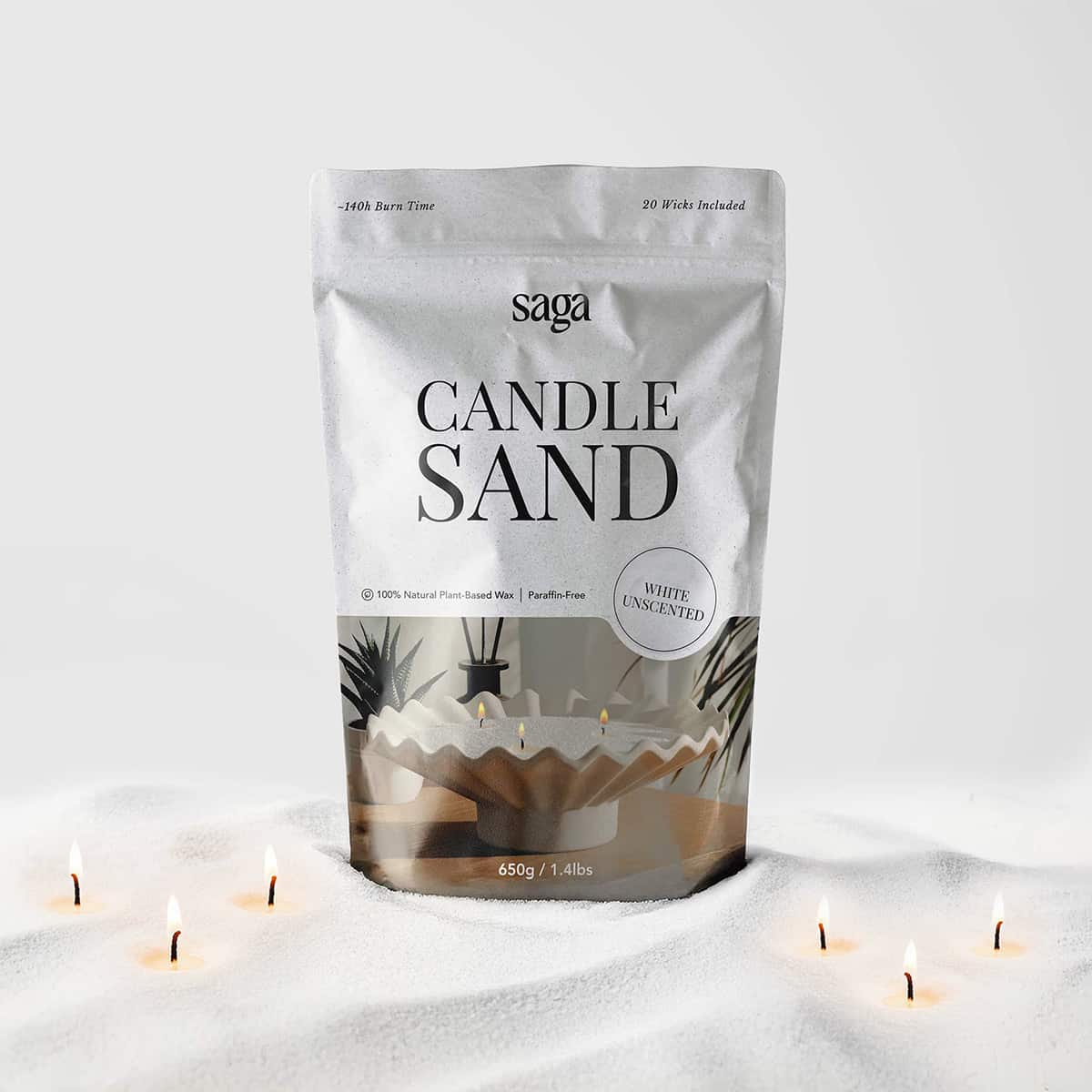
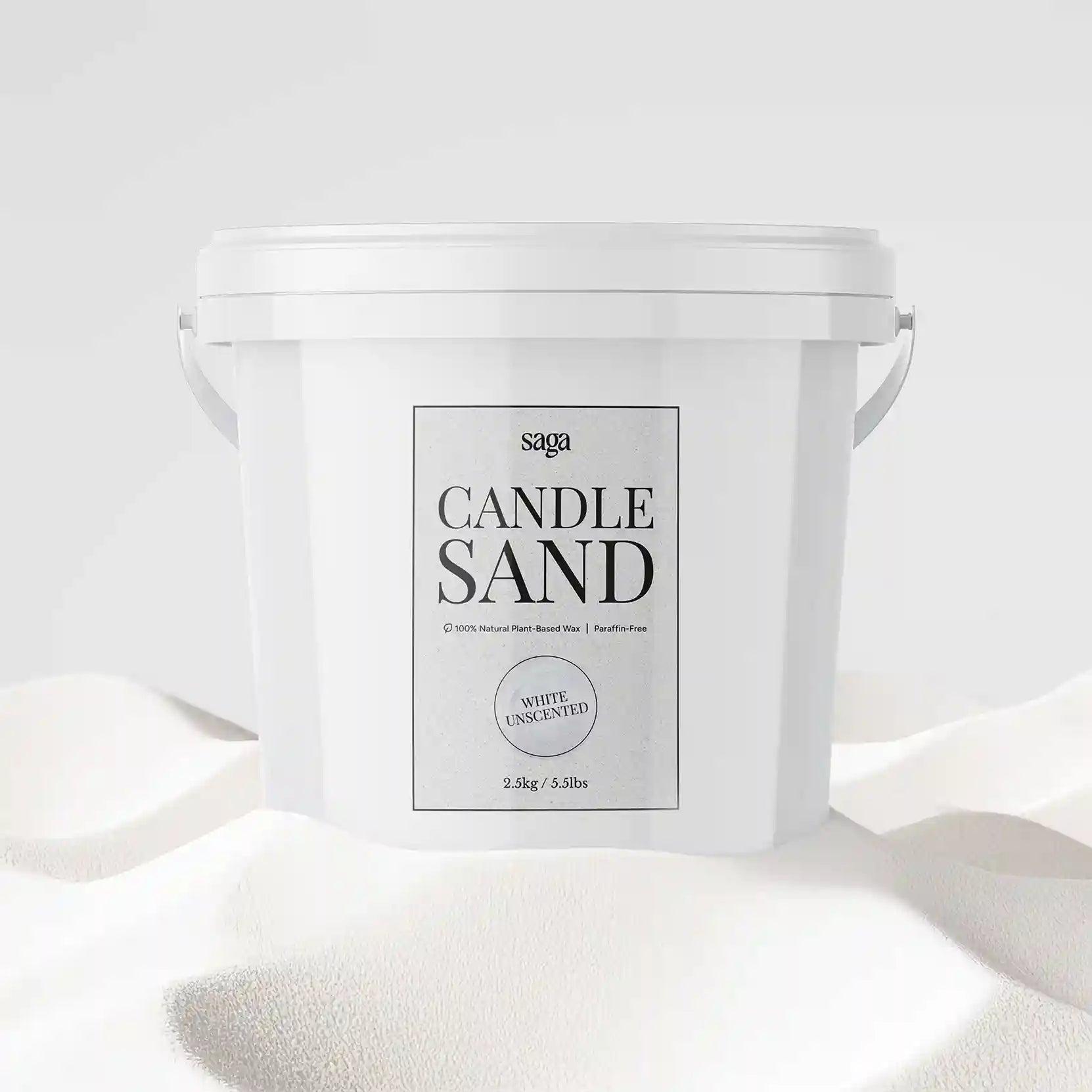
If you share your home with a dog, cat, or bird, the candles you burn matter more than you think. Here's everything pet owners need to know about choosing non-toxic candles — and why candle sand is one of the safest options available.
Quick links: Why pets are vulnerable · 4 things that make candles unsafe · Why candle sand is pet-friendly · Pet-friendly scents · Safety checklist · Signs of a reaction
You light a candle to relax after a long day. Your cat curls up nearby. Your dog stretches out on the rug. The room smells wonderful and everything feels right.
But should you be worried?
The short answer: it depends on what your candle is made of — and what happens when your pet inevitably knocks it over. Many conventional candles contain ingredients that can irritate or even harm pets, and a tipped candle with hot liquid wax and a live flame is a genuine fire and burn hazard. The good news is that with the right product, you can absolutely enjoy candles in a pet-friendly home.
In this guide, we'll break down exactly what makes a candle safe (or unsafe) for pets — from toxic ingredients to fire risk — and why candle sand, also called powder candle or pearled candle, is becoming the go-to choice for pet owners who refuse to compromise on ambiance.
💡 New to Candle Sand? Read our article on what is candle sand first!
Why Pets Are More Vulnerable to Candle Fumes Than Humans
Before we get into ingredients, it helps to understand why pets are more affected by candle fumes than we are.
A dog's sense of smell is roughly 100,000 times more powerful than a human's. Cats are about 9 to 16 times more sensitive. Birds have extremely efficient respiratory systems that absorb airborne chemicals far more rapidly than mammals do.
What this means in practice: a scent that seems pleasantly mild to you could be overwhelming — or even irritating — to your pet. And if the candle releases harmful compounds into the air, your pet's smaller body absorbs a proportionally larger dose.
Cats face an additional risk. Their livers lack certain enzymes (specifically glucuronyl transferase) needed to metabolize many volatile compounds. Substances that a dog or human can process and eliminate may accumulate in a cat's body, potentially causing liver damage over time.
The Four Things That Make a Candle Unsafe for Pets

Not all candles are created equal. When evaluating whether a candle is pet safe, there are four things to examine: the wax, the fragrance, the wick, and what happens when it tips over.
1. The Wax
Paraffin wax is the most common and cheapest candle wax on the market. It's a petroleum byproduct, and when burned, it can release volatile organic compounds (VOCs) including benzene, toluene, and formaldehyde. These aren't just unpleasant — they're classified as toxic or hazardous under federal law.
For pets with smaller lungs and faster respiratory rates, these emissions can trigger coughing, sneezing, watery eyes, and respiratory distress. Long-term exposure may contribute to more serious health problems.
Plant-based waxes — including vegetable wax, coconut wax, soy wax, and beeswax — burn significantly cleaner, producing minimal smoke and soot. They don't release the harmful petrochemical byproducts associated with paraffin.
Saga candle sand is made from 100% vegetable wax — fully plant-based and eco-friendly. No paraffin, no petroleum derivatives, no soy allergens.
2. The Fragrance
This is where things get tricky for pet owners. Even "natural" candles can be problematic if they contain the wrong fragrances.
Synthetic fragrance oils often contain phthalates — chemicals used to make scents last longer. Phthalates have been linked to endocrine disruption in both animals and humans. Many mass-produced candles don't disclose their full fragrance formulations, making it impossible to know what you're actually burning.
Essential oils seem like the safer alternative, but that's not always the case. While essential oils are natural, many of them are toxic to pets — especially cats. Essential oils that are known to be harmful to cats and dogs include:
- Tea tree (melaleuca)
- Peppermint
- Eucalyptus
- Citrus oils (lemon, orange, lime, grapefruit)
- Cinnamon
- Clove
- Pine and wintergreen
- Ylang-ylang
- Pennyroyal
- Sweet birch
Cats are particularly vulnerable because their livers cannot efficiently break down the phenols and terpenes found in many essential oils. Even exposure through airborne diffusion can cause drooling, vomiting, tremors, or respiratory distress in sensitive cats.
What to look for instead: Premium-grade fragrance oils that are IFRA certified (International Fragrance Association). IFRA certification means the oils have been independently tested and comply with strict safety standards, including limits on irritants and allergens. This is a higher bar than simply being "natural."
All Saga scented candle sand uses only premium-grade, IFRA-certified fragrance oils. Our fragrances are free of phthalates and formulated to be safe for indoor use around your family — including the four-legged members.
3. The Wick
This one is often overlooked, but it matters. Some candles — especially cheap imports — still use wicks with metal cores (typically zinc or, in older products, lead). Metal-core wicks can release trace heavy metals into the air when burned.
Cotton wicks are the safest option. They produce a clean, steady burn with minimal soot and no metallic emissions.
Every Saga candle sand set includes cotton wicks. The burn is clean, toxin-free, and allergen-free.
4. The Fire and Spill Risk
This is the one most people don't think about until it's too late. Pets are curious, clumsy, and unpredictable. A wagging tail, a cat leaping onto a shelf, or a dog chasing a toy across the living room — any of these can send a candle crashing to the floor.
With a traditional candle, that means a live flame on your carpet, hot liquid wax spreading across surfaces, and a real risk of fire or burns. The National Candle Association reports that candles cause roughly 4% of all home fires, and pets are among the leading causes of those incidents.
Candle sand significantly reduces this risk. Because the wax is in a dry, granular form, a tipped container won't spill hot liquid wax — and the flame will typically extinguish on its own as the sand disperses. It's a much more forgiving design for homes with active pets, though as with any open flame, you should never leave a burning candle completely unattended.
With Saga candle sand, a spill is a cleanup — not an emergency. But always follow basic candle safety: keep flames within sight and out of direct reach of pets.
Why Candle Sand Is Uniquely Pet-Friendly
Beyond the ingredients and fire safety we covered above, candle sand has several more practical advantages for pet-friendly homes.
No Hot Wax Pooling, No Burn Risk to Paws
Traditional candles create a pool of hot liquid wax as they burn. If a pet gets too close — a curious nose, a dangling tail, a clumsy paw — that hot wax can cause painful burns. Candle sand only melts a tiny area right around the wick. The rest stays cool and solid. Even if your pet touches the sand itself, there's a very low risk of a wax burn.
No Tunneling, No Wasted Wax
Conventional candles often tunnel — burning down the center and leaving a ring of unused wax on the sides. This wasted wax is a sunk cost. With candle sand, every grain can be used. You can reshape it, move it between containers, and refresh it to look brand new any time you want.
Fully Reusable and Zero Waste
After burning, you can flip the wick to bury the small melt pool, cut the wick to reuse the clean portion, or simply insert a new one. This means less waste going to the landfill — and fewer trips to buy replacement candles. Each wick burns for approximately 12 hours, and every Saga set includes plenty of extras.
The Unscented Option
If you're extra cautious — or if your pet is particularly sensitive — the safest candle of all is an unscented one. Saga offers both white and black candle sand in unscented versions, which are among our most popular products. You get the warm glow and ambiance of a candle with zero fragrance risk.
Some customers also use unscented candle sand as a base and add a few drops of their own vetted essential oils near the wick before lighting — giving them full control over exactly what goes into the air.
Which Saga Scents Are a Good Fit for Pet-Friendly Homes?

If you want a scented candle sand that's considerate of pets, the key is to avoid scents built around essential oils that are known irritants.
Here's how Saga's scent range stacks up:
Generally considered pet-friendly choices:
- Wild Wood — Earthy oud wood. No citrus, no mint, no phenol-based oils. A deep, grounding scent that most pets won't find irritating.
- Dark Honey — Sweet honey and tobacco with tonka bean. Warm and rich without any of the essential oils flagged as problematic for cats or dogs.
- Gold Coast — Tropical mango, lime, and pineapple with vanilla sugar. While citrus oils can be an issue in concentrated form, IFRA-certified fragrance oils use safe, regulated levels that are very different from pure essential oils. That said, if your cat is particularly sensitive, you may want to test in a well-ventilated room first.
Use with extra caution around cats:
- Lush Lemongrass — Lemongrass is in the citrus family and can be irritating to cats in concentrated essential oil form. As an IFRA-certified fragrance oil, it's formulated within safe limits — but if you have a cat with respiratory sensitivities, err on the side of caution or choose a different scent.
Always a safe bet:
- Unscented (White or Black) — Zero fragrance compounds of any kind. If you have birds — which are the most sensitive pets of all — unscented candle sand with a cotton wick is your best option.
Disclaimer: We're candle makers, not veterinarians. If your pet has a known respiratory condition, consult your vet before introducing any scented product into your home. The guidance above is based on widely available veterinary resources and is meant for generally healthy pets.
Quick Checklist: How to Tell If a Candle Is Pet Safe
Not sure about a candle you already own? Run through this checklist:
The wax — Is it plant-based (vegetable, coconut, soy, beeswax)? Or is it paraffin (petroleum-based)? Plant-based wins.
The fragrance — Does it use IFRA-certified fragrance oils? Or does it contain undisclosed "fragrance" blends, phthalates, or concentrated essential oils known to be toxic to pets? Transparency wins.
The wick — Is it cotton or wood? Or does it have a metal core? Cotton or wood wins.
The form factor — Does the flame self-extinguish if knocked over? Candle sand does — traditional candles don't. Does it create a hot liquid wax pool that could burn paws? Candle sand only melts a tiny area around the wick. Self-extinguishing and low-pooling wins.
The ventilation — Are you burning it in a well-ventilated room where your pet can leave if the scent is too strong? Open a window or door, and always give your pet an escape route.
Signs Your Pet May Be Reacting to a Candle

Even with a pet-safe candle, it's wise to monitor your pet when you light one — especially for the first time. Watch for these signs:
- Leaving the room repeatedly when a candle is lit
- Sneezing, coughing, or wheezing
- Watery or irritated eyes
- Excessive drooling (especially in cats)
- Lethargy or unusual behavior
- Scratching at the nose or face
If you notice any of these, extinguish the candle immediately, ventilate the room, and observe your pet. If symptoms persist, contact your veterinarian.
The Bottom Line
You don't have to choose between a cozy, beautifully scented home and the health of your pets. The key is choosing candles made with clean ingredients — plant-based wax, cotton wicks, and properly certified fragrances — and being mindful of ventilation.
Candle sand checks every box on the pet-safety checklist, and it adds benefits that traditional candles simply can't match: low spill risk, no tunneling, zero waste, and the freedom to customize your candle in any container you love.
Whether you go scented or unscented, white or black, in a vintage ceramic bowl from our bowl selection, or a sleek glass vase — Saga Candles sand lets you enjoy candlelight with total peace of mind.
Your pets will thank you. (Or at least they won't knock over your candle and ruin the rug.)
Ready to try pet-safe candle sand? Shop Saga Candle Sand →