You've seen these candles called "pearled candles" by one brand and "candle sand" by another — sometimes "powder candles" or "sand wax" too. Are they the same product? Is one better? Here's the honest answer, plus what actually matters when you're choosing a brand.
Quick links: The short answer · Why two names exist · Are there real differences? · What actually matters · Common questions · Bottom line
You've been scrolling Instagram or Pinterest and seen them — those candles where the wax pours into a bowl like fine sand or tiny beads, gets a wick popped in the middle, and lights up like something out of a Scandinavian design magazine. Beautiful. Different. Reusable. You want one.
But then you start shopping, and the names get confusing fast. One brand calls them pearled candles. Another calls them candle sand. A third uses powder candles, sand wax, or wax pearls. Are these all the same product? Is one a premium version of the other? Are you missing some critical detail?
Short answer: in nearly every case, you're looking at the same product category — just with different brand-name labels. But there's real nuance underneath, and there are differences between brands that genuinely matter (just not the differences you might expect). Let's break it down properly.
💡 New to candle sand? Read our article on what is candle sand first for a full primer on how it works.
The short answer: same product, different names
Pearled candles and candle sand refer to the same type of product. It's granular plant-based wax that you pour into a heat-resistant container, top with a cotton wick, and light. The wax doesn't come pre-shaped the way a traditional candle does — you shape it yourself by choosing your container.

Some brands prefer the term "pearled candles" because the imagery — pearls, jewel-like, luxurious — appeals to a certain customer. Other brands prefer "candle sand" because it more accurately describes what the granules actually feel like, and because the term "sand candle" has been around for decades.
Candle sand. Pearled candles. Powder candles. Wax pearls. Sand wax. Granular wax candles. They all describe the same fundamental thing: free-form granular candle wax that you customize, reuse, and refresh.
Why two different names exist
Sand candles came first
Granular candle wax has existed for a long time. If you grew up in the 80s or 90s, you might remember "sand art candles" — kids' craft kits where you'd layer colored wax granules in a glass to create a striped design, then poke a wick in the middle and light it. They were paraffin-based, often dyed with bright synthetic colors, and weren't really designed for an adult home aesthetic.
But they were the conceptual ancestors of today's modern candle sand. The basic mechanic — granular wax that you pour and shape, rather than wax that comes pre-moulded — has been around for decades. The terminology around it has just evolved.
"Pearled" came later as a branding choice
In the last decade, as candle sand started to be reformulated with cleaner, plant-based waxes and marketed toward adult home decor, some brands chose new terminology to distance their product from the kids-craft-store image of older sand candles. "Pearled" sounds more luxurious. "Pearls" evokes elegance and intention. It's a legitimate branding decision — and a smart one for differentiating a premium plant-based product from the cheap paraffin candle sand of decades past.
But the underlying product — granular wax that you pour, wick, and burn — is the same product category. The terminology is mostly marketing.
What about granule shape?

This is where some brands try to draw a real technical distinction. The claim is that "pearled" wax has larger, rounder, more uniform granules, while "sand" wax has smaller, more irregular, sand-like granules. There's a kernel of truth to this — different manufacturing processes can produce slightly different shapes — but in practice, the burn behavior, reusability, and overall user experience is almost identical between the two. Granule shape is mostly an aesthetic preference, not a meaningful performance difference.
Some people prefer the look of finer, sand-like granules in a matte ceramic bowl. Others prefer the look of larger, glossier pearls in a clear glass vase. Neither one burns better than the other.
Are there real differences worth knowing about?
Yes, but the differences that actually matter aren't between "pearled" and "sand" terminology. They're between brands, across factors that affect how cleanly the candle burns, how good it smells, and how long it lasts.
Wax composition
This is the single biggest factor. Some granular candle products on the market are still made with paraffin — a petroleum byproduct. Others use soy (often genetically modified, sometimes blended). Higher-quality brands use 100% plant-based vegetable wax with no paraffin, no soy, no petroleum derivatives.
Why does it matter? Paraffin is cheap, but it produces visible black soot when burned and releases volatile compounds into the air. Plant-based vegetable wax burns much more cleanly. If you're considering granular candles for a bedroom, a nursery, a small apartment, or any space where you'll be inhaling the air for hours, the wax composition matters far more than what the brand calls the product.
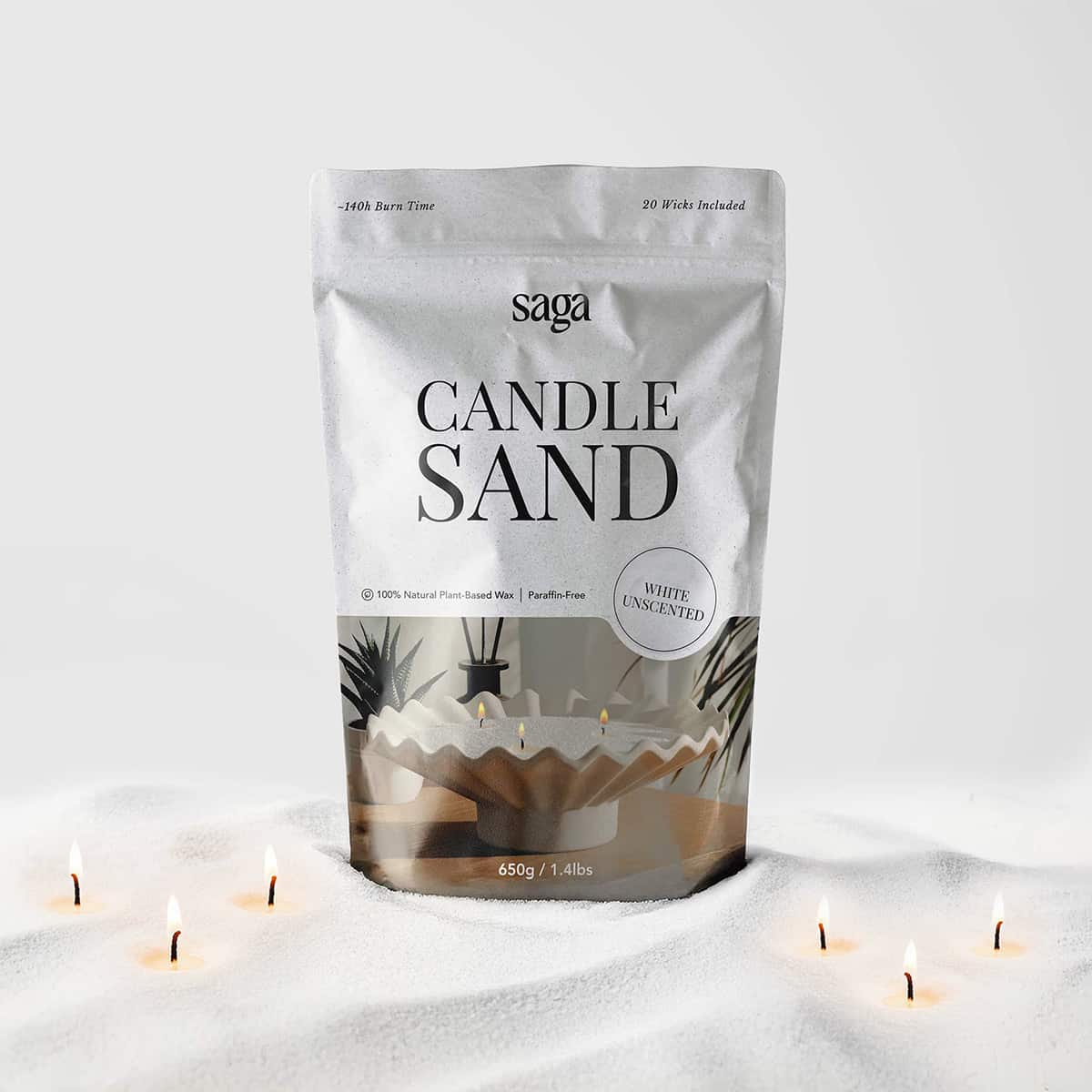
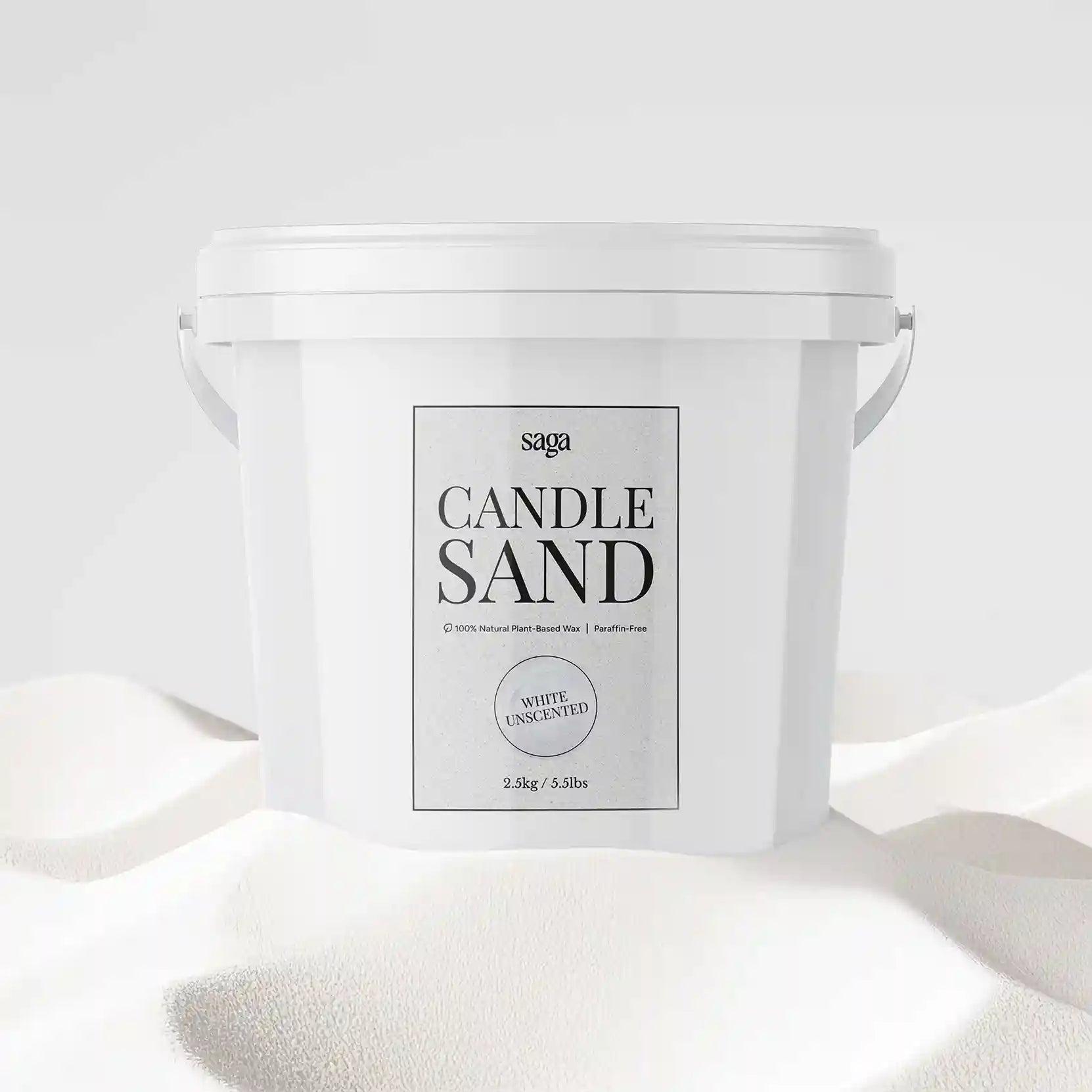
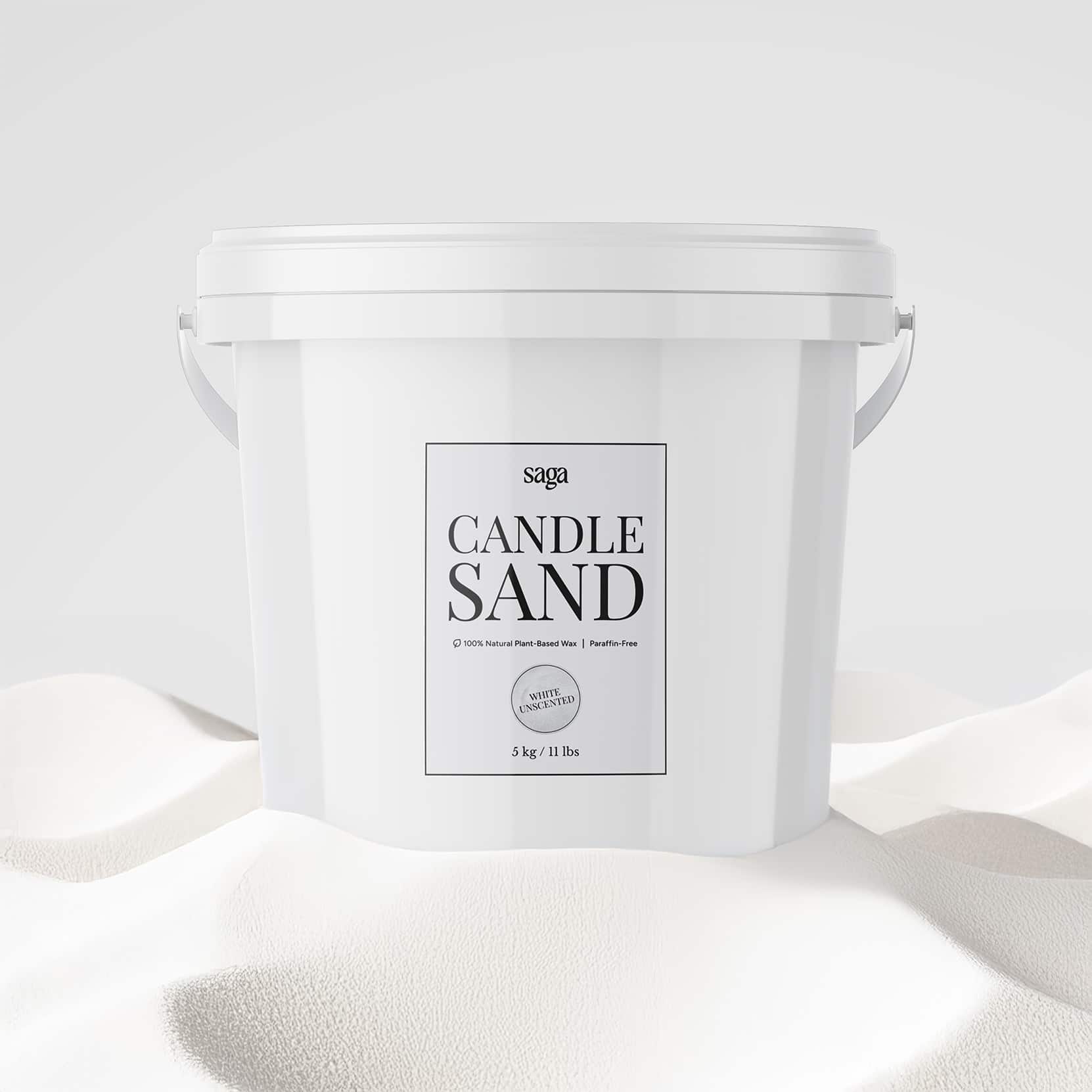
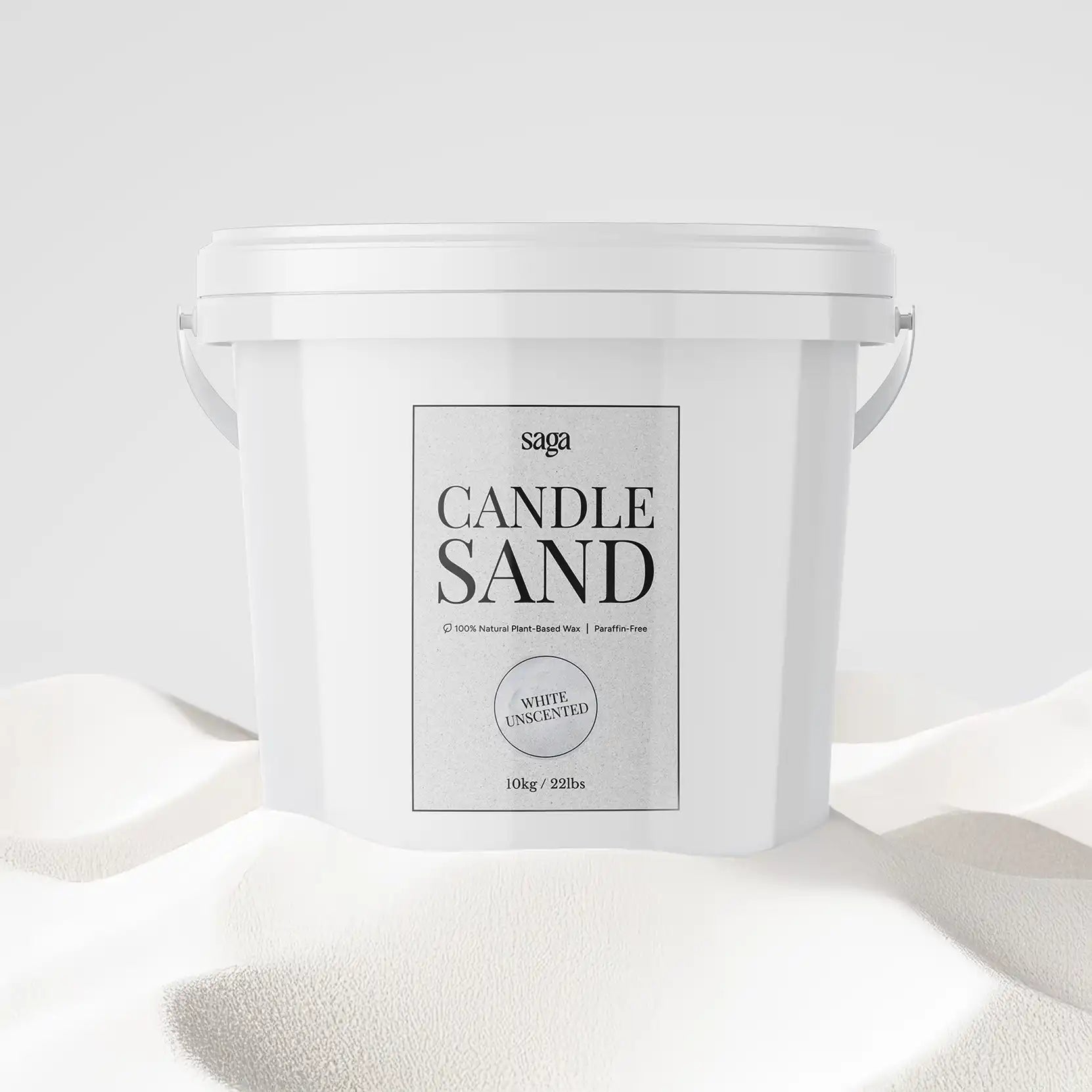
Saga candle sand is made by hand from 100% plant-based vegetable wax — no paraffin, no petroleum, no soy.
Fragrance quality
Scented candle sand is only as good as the fragrance oils used to scent it. Cheaper brands often use synthetic fragrance compounds heavy on phthalates and undisclosed ingredients. Quality brands use IFRA-certified fragrance oils — these are screened by the International Fragrance Association for safety when burned in candles. If a brand doesn't mention fragrance certification, that's worth a follow-up question.
Saga uses only premium-grade IFRA-certified fragrance oils across all six scents — Lush Lemongrass, Gold Coast, Wild Wood, Rhubarb Fizz, Spicy Pomegranate, and Dark Honey.
Wick quality
The wick is the only thing actually doing the work of burning. Cotton wicks are the gold standard: clean burn, minimal soot, allergen-free. Some cheaper products ship with blended or synthetic wicks that smoke more and produce more residue. Always check the wick material before buying.
How many wicks come included
This is a small detail but worth checking. Each cotton wick burns for around 12 hours. If you're buying a bag of candle sand that contains enough wax for hundreds of hours of burn time but only ships with a handful of wicks, you'll run out of wicks long before you run out of wax. Generous wick counts mean fewer reorders.
Whether you can buy refills
The whole point of granular candles is reusability - keep your favorite bowl, refill the wax. But you can only do that if the brand sells refill packs separately. Check the candle sand collection to confirm refill availability before committing to a brand.
What actually matters when choosing a granular candle

If you've made it this far, here's the practical takeaway. When picking a granular wax candle - whether the brand calls it pearled, sand, powder, or anything else - these are the questions worth asking:
- Is the wax 100% plant-based, or does it contain paraffin or soy?
- Are the fragrance oils IFRA-certified?
- Are the wicks cotton?
- How many wicks are included per bag?
- Are scented and unscented options both available?
- Are refill packs sold separately?
- Is the brand transparent about ingredients on the label?
If a brand answers "yes" to all of these, what they call the product on the bag really doesn't matter. The substance is the same.
Common questions about pearled candles
Are pearled candles better than regular candles?
"Better" depends on what you value. Granular candles (whether you call them pearled or sand) are reusable, endlessly customizable, and tend to burn more cleanly than paraffin pillar candles. The flame also typically self-extinguishes if the container is tipped over, since the granules disperse and starve the wick — which significantly reduces certain candle-fire risks compared to a traditional pillar that keeps burning after a fall. That said, you should still always follow basic candle safety: never leave a candle unattended, and keep flames out of reach of children and pets.
If you want something elegant, low-mess, and zero-waste, granular candles are a strong choice. If you want a quick grab-and-light option for occasional use, traditional candles still have their place.
Can you reuse the pearls in pearled candles?
Yes, this is the main appeal of the product. When a wick burns down, you remove the spent wick, gently shake or smooth the granules to level the surface, insert a fresh wick, and light again. You can keep refreshing for as long as you have wax. When you eventually run low, you buy a refill pack instead of throwing away the entire candle.
You can also cut a partially-used wick and reuse the unburned portion, or flip the wick to bury a small melt pool - there are several ways to keep the candle looking new.
How long do pearled candles last?
Each cotton wick burns around 12 hours. The total lifespan of your candle sand depends on how much wax you start with and how often you replace wicks. A typical bag of candle sand can power a candle for hundreds of hours of cumulative burn time — usually months of regular use, sometimes a full year for occasional users.
How do you add scent to unscented pearled candles?
Two options. The first is to buy pre-scented filling packs from a quality brand — these come pre-blended with IFRA-certified fragrance oils, so the scent is even and consistent throughout. The second is to add a few drops of your favorite essential oil to unscented sand, mix gently, and let it sit for a few minutes before lighting. Unscented variants in white, black, wine red, sky blue, and emerald green are popular for exactly this reason, since they let you control the scent profile yourself.
One safety note: never drip essential oils onto an already-burning candle. Always scent the wax before lighting, away from any open flame.
For the full setup process and troubleshooting, see our beginner's guide to using candle sand.
Do pearled candles work for floating candle displays?
White granular wax floats on water — colored varieties typically don't. To float, pour at least 2 inches of white candle sand on top of water in a heat-resistant vase, insert a wick, and make sure the bottom of the wick stays dry. It's one of the easiest ways to create a floating candle centerpiece for events.
Bottom line
Pearled candles and candle sand are two names for the same kind of product: granular plant-based wax that you pour, wick, and light. The terminology comes down to branding - some companies prefer the luxury connotations of "pearled," others prefer the descriptive accuracy of "sand." Both are legitimate.
The differences that actually matter aren't on the label. They're in the wax (plant-based vs paraffin), the fragrance (IFRA-certified vs anonymous synthetic), the wicks (cotton vs blended), and the brand's transparency about all three. When you shop, look past the name. Read the ingredients.
And if you want a granular candle that's genuinely plant-based, IFRA-certified, and shipped with enough wicks to last — well, that's exactly what we make at Saga.
Ready to try candle sand for yourself? Shop Saga Candle Sand →