You've seen it on Instagram, in home décor magazines, and filling beautiful ceramic bowls on café tables. Candle sand (also called sand candle wax or granular candle wax) is quickly becoming one of the most talked-about alternatives to traditional candles. But what exactly is it, how does it work, and is it actually worth switching to?
This guide answers every question you might have. We cover what candle sand is made from, exactly how to use it step by step, which containers work best, how it compares to regular candles, whether it's safe, and much more. By the end, you'll know everything you need to get started.
Quick links: What is candle sand? · How does it work? · How to use it · Best containers · vs traditional candles · Scented options · Is it safe? · FAQ
💡 Some brands also refer to it as pearled candle wax or pearled candles - same product, different name.

What is Candle Sand?
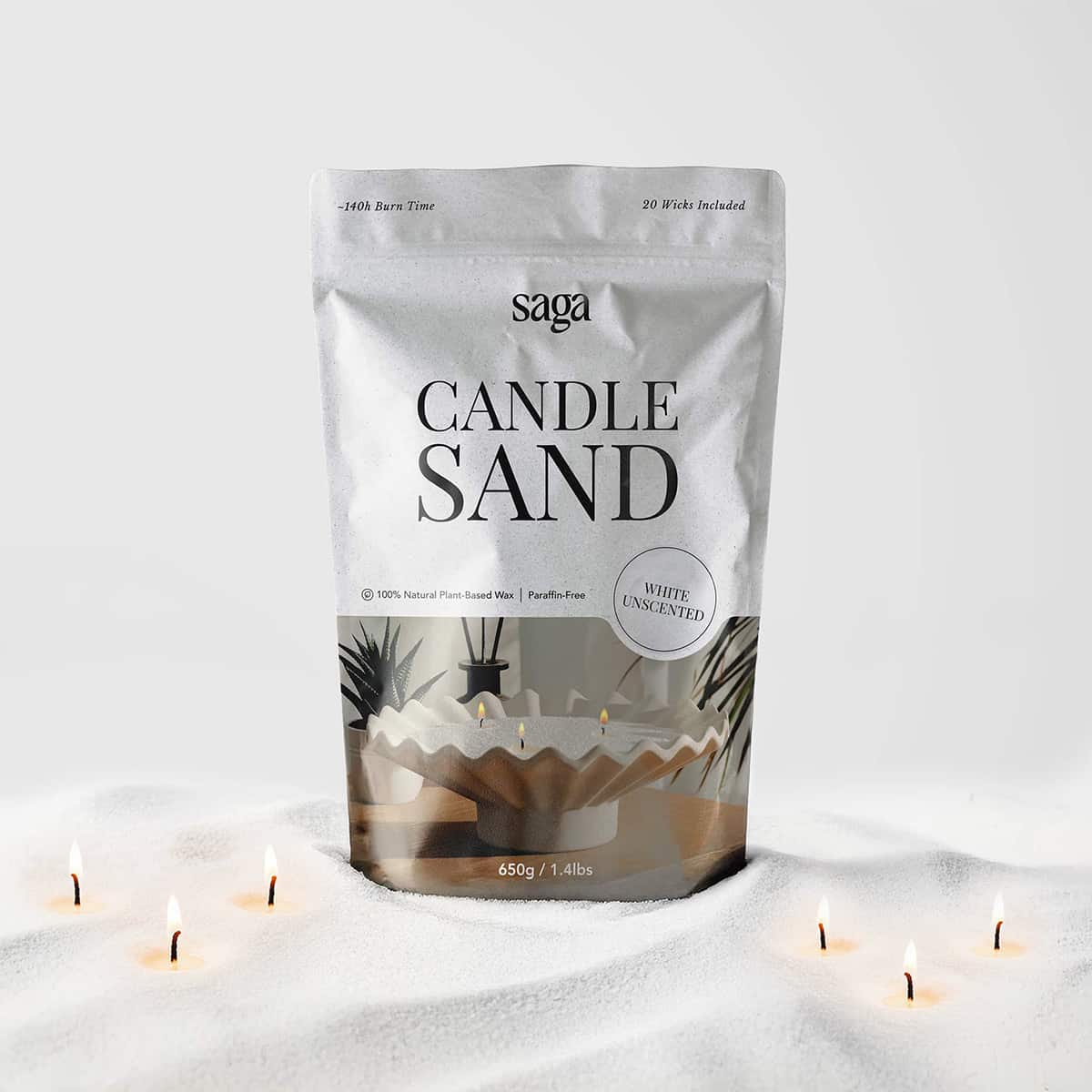
Candle sand is a plant-based wax in loose granule or powder form. Unlike a traditional candle, which arrives pre-moulded in a specific shape, candle sand is free-form. You pour it into any heat-resistant container you choose, insert a cotton wick, and light it. The result looks stunning, burns cleanly, and can be refreshed and reused indefinitely.
The name "candle sand" comes from its texture: the granules are fine and powdery, resembling sand both in appearance and in the way they flow freely. Some brands also refer to it as pearled candle wax, granular candle wax, or candle wax sand - all essentially the same product.
Good quality candle sand, like Saga's, is made from 100% natural, plant-based vegetable wax with no paraffin. Paraffin is a petroleum by-product found in most cheap candles; it burns less cleanly and isn't biodegradable. Plant-based candle sand is a significantly more eco-friendly candle option, both in production and in use.

How Does Candle Sand Work?
The mechanics are simple but clever. When you light the wick, the heat melts the granules immediately surrounding it, forming a small, stable pool of liquid wax, just like a traditional candle. But here's the key difference: only the wax directly around the wick melts. The rest of the granules stay loose and powdery.
This means:
- No dripping - the wax stays contained in the burn pool around the wick
- No pooling across the container - unlike traditional candles that flood the surface with melted wax
- No leftover residue to scrape out - when the wick burns down, the surrounding wax has already re-solidified
When the wick burns out, you simply remove the used wick, give the sand a gentle shake to level the surface, insert a fresh wick, and light again. The same bag of candle sand can provide many hundreds of hours of candlelight over its lifetime, making it one of the most genuinely reusable candles on the market.
For the complete step-by-step setup, the four most common mistakes beginners make, and full troubleshooting, see our beginner's guide to using candle sand.
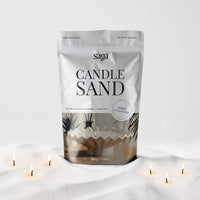
Saga Candle Sand
View product +
How to Use Candle Sand: Complete Step-by-Step Guide
Using candle sand for the first time is easy. Here's exactly what to do:
What You'll Need
- Candle sand (650g / 1.4 lbs is a good starting amount for most containers)
- Cotton wicks (usually included when you buy candle sand)
- A heat-resistant container (glass, ceramic, stone - more on this below)
- A lighter or long match

Step 1: Choose Your Container
Any heat-resistant vessel works: glass jars, ceramic bowls, stone dishes, terracotta pots, even thick-walled cocktail glasses. Avoid thin glass, plastic, or any container you're not sure can handle sustained heat. As a sizing guide:
- 250ml (8.5 fl oz) container: ~140g (5 oz) of candle sand
- 500ml (17 fl oz) container: ~280g (10 oz) of candle sand
- 750ml (25 fl oz) container: ~420g (15 oz) of candle sand
A quick formula: multiply your container's volume in ml by 0.56 to get the grams of sand needed (or multiply fl oz by 16.5 to get the equivalent in grams).
Step 2: Pour in the Candle Sand
Pour the candle sand into the container and give it a gentle tap on the table to settle the surface evenly. You don't need to pack it - loose is fine. Leave a small gap at the top if you want a cleaner finished look.
Step 3: Insert Your Wick
Push a cotton wick straight down into the centre of the sand, leaving approximately 1cm (½ inch) above the surface. The sand holds the wick in place naturally, with no need for glue or wick holders.
If you're using multiple wicks in a larger container, keep at least 8cm (3 inches) between each wick. Too close together and the burn pools will merge and overheat; too far apart and the outer wick may struggle to stay lit. For a wide, shallow bowl, three wicks arranged in a triangle typically gives the most even, beautiful burn.
Step 4: Light and Enjoy
Light the wick and enjoy. Each cotton wick burns for approximately 12-15 hours. You can relight the same wick multiple times until it burns down to the surface, at which point it's time for a fresh wick.
Step 5: Refresh When Ready
Once a wick has burned down, remove it (it will lift out easily once the wax around it has cooled and re-solidified), give the sand a gentle shake to level the surface, and insert a new wick. You're ready to go again. No mess, no waste, no need to buy a new candle.

What Containers Work Best with Candle Sand?
This is one of the most creative aspects of using sand candles - almost anything goes. Here are some of the most popular and effective options:
Ceramic Bowls
Wide, shallow ceramic bowls are the classic candle sand display. They allow for multi-wick arrangements, look stunning as table centrepieces, and the matte finish of most ceramics contrasts beautifully with the texture of the sand.
Glass Jars and Vases
Glass lets you see the candle sand from the sides, which is particularly beautiful with coloured sand. Cylindrical glass vases work especially well with a single centred wick for a clean, minimalist look.
Stone and Concrete Vessels
Thick stone or concrete bowls are excellent heat conductors and give an earthy, architectural feel. Make sure the material is non-porous and sealed, as unsealed stone can absorb wax over time.
Vintage and Repurposed Containers
Old teacups, vintage jars, antique brass bowls - candle sand breathes new life into any vessel. This is where the real creativity happens. If it's heat-resistant and you love the look of it, try it.
One hard rule: never use plastic, thin glass, or any container you haven't verified as heat-resistant. When in doubt, test the container with warm (not boiling) water first and check whether it feels stable under sustained warmth.

Candle Sand vs Traditional Candles: Which is Better?
Here's an honest comparison:
| Feature | Candle Sand | Traditional Candle |
|---|---|---|
| Container flexibility | ✅ Any heat-resistant container | ❌ Fixed shape/holder |
| Reusability | ✅ Reusable | ❌ Single-use |
| Drips and mess | ✅ None | ❌ Common issue |
| Eco-friendliness | ✅ Plant-based, less waste | ⚠️ Varies by brand |
| Safety (tip-over) | ✅ Self-extinguishes | ❌ Continues to burn |
| Upfront cost | ⚠️ Slightly higher | ✅ Generally lower |
| Long-term cost | ✅ Much lower (longer burn-time) | ❌ Ongoing repurchase |
| Aesthetic versatility | ✅ Unlimited | ❌ Limited to available styles |
The short version: candle sand costs slightly more upfront but is significantly more versatile, more sustainable, and has a longer burn-time. The one area traditional candles still win is immediate simplicity - you buy one, light it, done. Candle sand gives you the option to reuse or reshape your candle after each burn.
Can You Get Scented Candle Sand?
Yes, and this is one of the most popular versions of the product. Scented candle sand has premium IFRA-certified fragrance oils blended directly into the wax granules during production. When the wick burns, the heat gently diffuses the scent into the room. The effect is subtle and consistent rather than the sometimes-overwhelming burst you get from heavily scented traditional candles.
Popular scent profiles include fresh citrus and lemongrass, spiced fruit, floral, and woody or earthy options. Saga's scented candle sand comes in a range of curated fragrances designed to complement any room.
You can also add your own fragrance to unscented candle sand by mixing in a few drops of essential oil or candle fragrance oil before use. Just stir it through gently and allow a few minutes for absorption before lighting.
Coloured candle sand is also widely available, from classic white and black to wine red, emerald green, and sky blue, making it straightforward to match your candle sand to your interior palette or seasonal theme.
Read more about scented candle sand from our other article.
Is Candle Sand Safe?
Yes, and in some ways it's safer than traditional candles. The most significant safety advantage is what happens if the container is knocked over: because the granules are loose, they smother the flame almost immediately rather than continuing to burn. This is a meaningful risk reduction in homes with pets, children, or in busy spaces.
Have pets at home? Read our guide to pet safe candles.
That said, candle sand is still an open flame and should be treated accordingly. Follow these guidelines for safe use:
- Always use heat-resistant containers - verify before use
- Trim wicks to 1cm (½ inch) before each burn to prevent excessive flame height or sooting
- Keep wicks at least 8cm (3 inches) apart in multi-wick arrangements
- Never leave a burning candle unattended
- Place on a stable, heat-resistant surface - not directly on wooden or lacquered furniture
- Keep away from draughts - wind can cause uneven burning or flickering that accelerates wick consumption
- Don't burn for more than 4 hours at a stretch - let the candle cool before relighting for best results
Good quality candle sand uses natural, plant-based wax and IFRA-certified fragrance oils, which means it burns without releasing the toxins associated with paraffin wax candles. If you or someone in your home is sensitive to candle smoke or fragrance, opt for the unscented version.
Frequently Asked Questions About Candle Sand
How long does candle sand last?
The candle sand itself doesn't "expire" - it will last as long as you keep replacing the wicks. A 650g (1.4 lb) bag typically provides around 140 hours of burn time across the wicks included. Once you've used the included wicks, replacement wicks are inexpensive and widely available.
How much candle sand do I need?
Use this guide: small container (250ml / 8.5 fl oz) needs ~140g (5 oz), medium container (500ml / 17 fl oz) needs ~280g (10 oz), large container (750ml / 25 fl oz) needs ~420g (15 oz). For a precise calculation, multiply your container volume in ml by 0.56, or fl oz by 16.5.
Can candle sand be reused?
Yes, and this is one of its biggest advantages. The sand itself doesn't get consumed by burning - only the wax immediately around the wick melts and re-solidifies. You simply replace the wick and continue using the same sand indefinitely.
Can you make floating candles with candle sand?
Yes. Carefully pour a layer of candle sand onto still water, keep the wick dry, and you can create floating sand candles. These work best in wide, shallow bowls with still water and are particularly striking as centrepieces.
Why is my candle sand wick not staying lit?
The most common causes are: the wick is too short (leave at least 1cm / ½ inch above the surface), the wick has absorbed moisture, or the sand is packed too tightly around the base of the wick. Try gently loosening the sand around the wick base and relighting.
Is candle sand the same as granular wax or pearled wax?
Essentially yes - these are different names for the same type of product. "Pearled wax" typically refers to a slightly coarser granule, while "candle sand" tends to be finer, but the function and usage are identical.
Can I mix scented and unscented candle sand?
Yes, and this is a great way to control fragrance intensity. Mix a portion of scented sand with unscented to create a subtler scent, or layer them in the container for a visual effect.
Ready to Try Candle Sand?
If you're looking for a more creative, sustainable, and long-lasting way to enjoy candlelight at home, candle sand is genuinely hard to beat. It's simple enough for complete beginners, flexible enough for experienced decorators, and reusable enough to replace your entire candle habit in one purchase.
Our Saga Candle Sand is 100% natural, plant-based, and paraffin-free. Each pack comes with 650g (1.4 lbs) of candle sand and 20 cotton wicks, enough to create dozens of beautiful sand candles in any container you love. Available in both scented and unscented options, and in a range of colours.